

Stone Town
The Oldest Town in East Africa
built out of stones.
Get 2 place destination safaries
€ 999/person
- Get 20+ Place Experience Safariess
- Get Normal Room On Your Travel
- 10 Hours Free Walking Safaries
- Free Photos Primate Animal
- Many More
Get 4 place destination safaries
€ 30.000/person
- Get 40+ Place Experience Safaries
- Get Luxury Room On Your Travel
- 86 Hours Free Walking Safaries
- Free Photos Primate Animal
- Many More
The Stone Town of Zanzibar
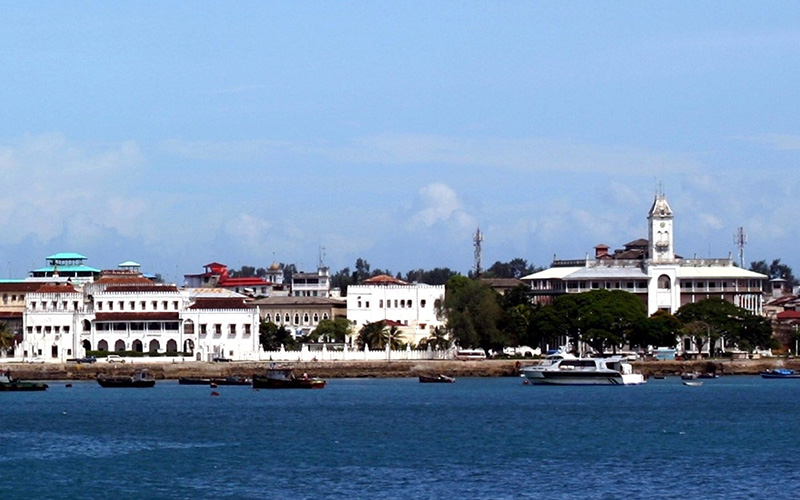
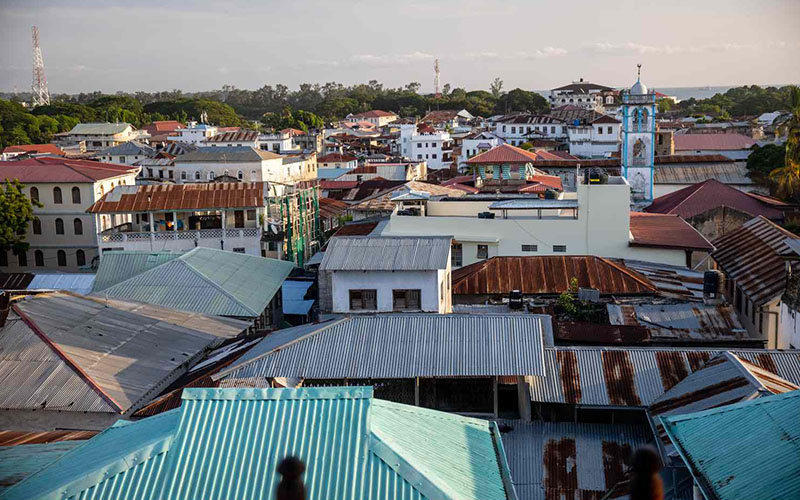
Stonetown of Zanzibar (Arabic: مدينة زنجبار الحجرية), also known as Mji Mkongwe (Swahili for "old town"), is the old part of Zanzibar City, the main city of Zanzibar, in Tanzania. The newer portion of the city is known as Ng'ambo, Swahili for 'the other side'. Stone Town is located on the western coast of Unguja, the main island of the Zanzibar Archipelago. Former capital of the Zanzibar Sultanate, and flourishing centre of the spice trade as well as the slave trade in the 19th century, it retained its importance as the main city of Zanzibar during the period of the British protectorate. When Tanganyika and Zanzibar joined each other to form the United Republic of Tanzania, Zanzibar kept a semi-autonomous status, with Stone Town as its local government seat.
Stone Town is a city of prominent historical and artistic importance in East Africa. Its architecture, mostly dating back to the 19th century, reflects the diverse influences underlying the Swahili culture, giving a unique mixture of Arab, Persian, Indian and European elements. For this reason, the town was designated as a UNESCO World Heritage Site in 2000.
Due to its heritage, Stone Town is also a major visitor attraction in Tanzania, and a large part of its economy depends on tourism-related activities.
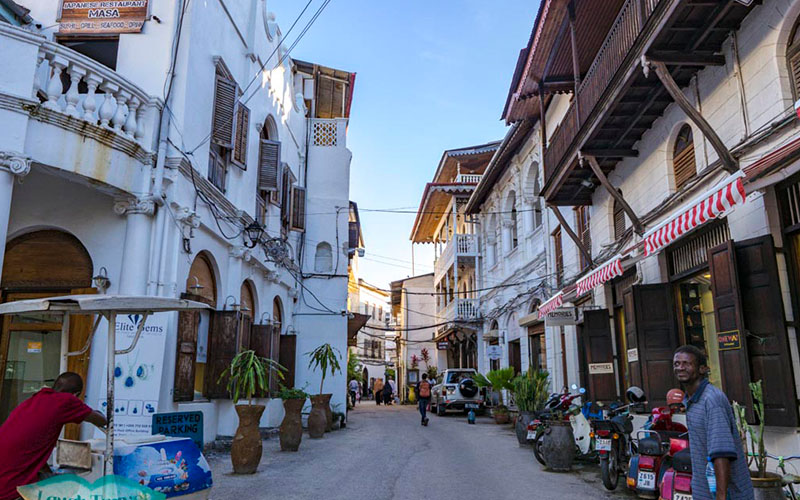
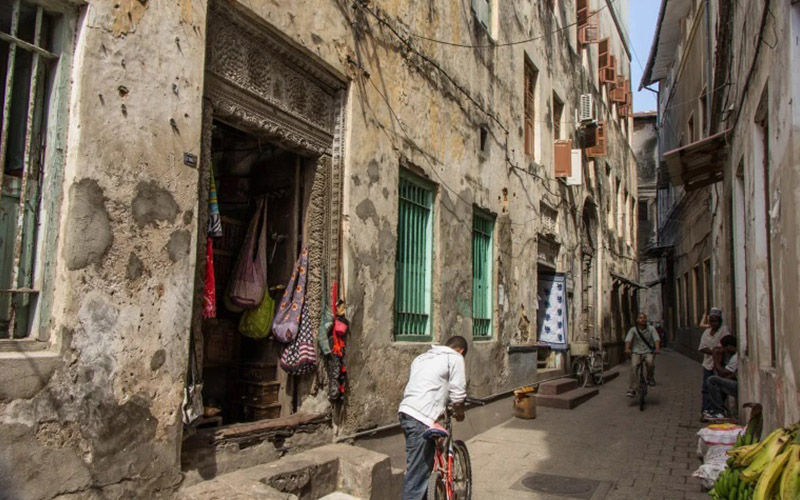
The heart of Stone Town mostly consists of a maze of narrow alleys lined by houses, shops, bazaars and mosques. Since most streets are too narrow for cars, the town is crowded with bicycles and motorbikes. The seafront has wider streets and larger, more regularly placed buildings.
Stone Town's architecture has a number of distinctive features, as a result of Arab, Persian, Indian, European, and African traditions mixing together. The name "Stone Town" comes from the ubiquitous use of coral stone as the main construction material; this stone gives the town a characteristic, reddish warm colour. Traditional buildings have a baraza, a long stone bench along the outside walls; this is used as an elevated sidewalk if heavy rains make the streets impracticable, or otherwise as benches to sit down, rest, socialize. Another key feature of most buildings is large verandas protected by carved wooden balustrades. The best-known feature of Zanzibari houses are the finely decorated wooden doors, with rich carvings and bas-reliefs, sometimes with big brass studs of Indian tradition. Two main types of doors can be distinguished: those of Indian style have rounded tops, while those in the Omani Arab style are rectangular. Carvings are often Islamic in content (for example, many consist of verses of the Qur'an), but other symbolism is occasionally used, e.g., Indian lotus flowers as emblems of prosperity.
Stone Town is punctuated with major historical buildings, several of which are found on the seafront; these include former palaces of the sultans, fortifications, churches, mosques, and other institutional buildings.
While Stone Town was included in UNESCO's World Heritage Sites in 2000, this designation does not provide complete protection for the town's heritage. Despite the establishment of a Conservation Authority, about 80% of the 1,709 buildings of Stone Town are in a deteriorating condition. As coral stone is very friable, frequent maintenance is needed for most of these buildings. Some major restoration projects (especially on the seafront) have been done in recent times by the Aga Khan Trust for Culture.